


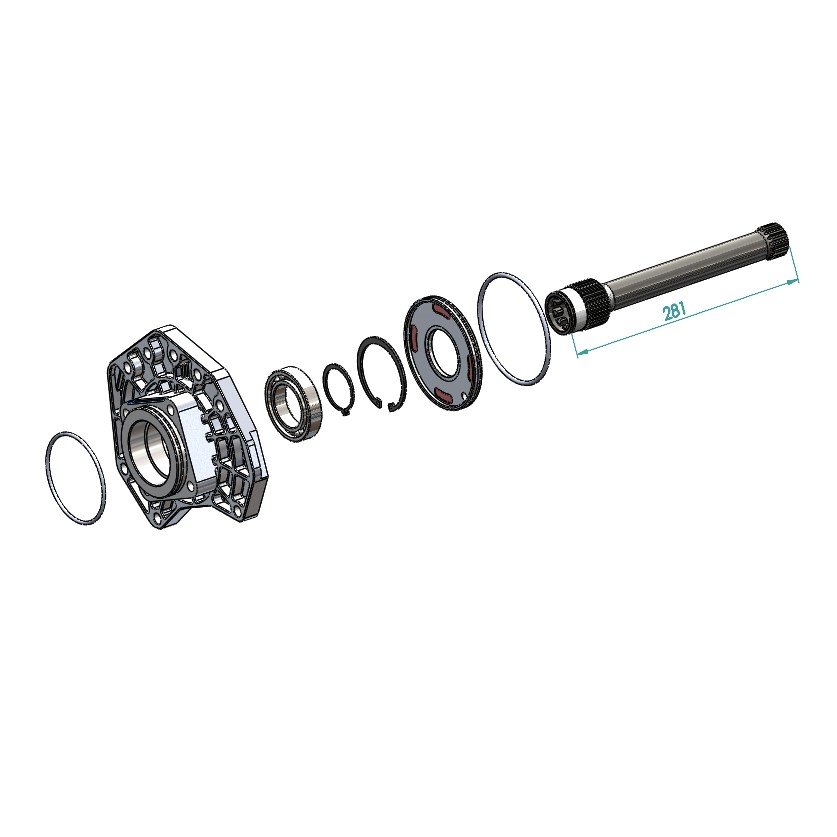

When I first encountered hydrostatic transmissions during my early years in mobile equipment engineering, I was fascinated by how quietly and smoothly they transformed power delivery 🚜. Unlike traditional mechanical drives that rely on fixed gear ratios, hydrostatic systems use fluid power to transmit torque — a concept that combines precision, control, and durability. Over time, especially working alongside the expert engineers at Özcihan Makina, I’ve come to appreciate how these systems redefine mobility and performance in industries ranging from agriculture to construction.

At its core, a hydrostatic transmission (HST) works by using a hydraulic pump to pressurize fluid, which then drives a piston pump or hydraulic motor. This design allows the engine’s mechanical energy to be converted into fluid energy and then back into rotational motion at the wheels or actuators. The result is variable speed and torque control without the need for shifting gears. In short, it’s power with precision — and Özcihan Makina has mastered the art of designing systems that make this process nearly seamless.

One of the biggest advantages of hydrostatic transmissions is the smoothness of operation. In mobile equipment such as loaders, tractors, or cranes, the ability to accelerate gently, reverse instantly, and maintain constant torque under load is invaluable. Because the hydraulic flow directly controls speed, operators gain unmatched maneuverability, especially in confined spaces. Pairing this system with a high-efficiency truck PTO or split shaft PTO setup from Özcihan Makina ensures even greater control and compatibility with heavy-duty attachments.

Let’s take a look at a quick breakdown of how hydrostatic transmissions compare to traditional gear-based systems:
| Feature | Hydrostatic Transmission | Conventional Gear Transmission |
|---|---|---|
| Speed Control | Infinite, variable | Fixed gear ratios |
| Torque Delivery | Constant across range | Dependent on gear |
| Maintenance | Lower mechanical wear | Requires regular clutch service |
| Efficiency | High at variable speeds | Best at constant speeds |
| Operator Comfort | Smooth, noise-free | More vibration and noise |

Beyond control, the other key benefit is durability. Because hydrostatic systems use fluid pressure instead of direct mechanical contact, wear and tear on gears and clutches is minimized. This makes them ideal for applications where uptime is critical — think of forestry harvesters or mining vehicles where mechanical breakdowns can cost hours of production. And when combined with premium components like gear pumps, reducers, and couplings, the system delivers both efficiency and longevity.

Of course, maintenance still matters. I always tell clients that even though hydrostatic drives require less mechanical attention, hydraulic fluid care is absolutely critical. Contaminated oil or improper filtration can lead to efficiency loss and overheating. That’s why Özcihan Makina integrates advanced filtration, temperature monitoring, and vibration-resistant valves in their designs — ensuring performance remains consistent even under extreme workloads 🌡️.

One of my favorite case studies involves a fleet of industrial sweepers that switched from traditional transmissions to hydrostatic systems developed by Özcihan Makina. The results were incredible — fuel efficiency improved by 18%, and operators reported smoother control during long shifts. When combined with a well-calibrated split shaft power take-off and durable cardan shafts, these systems provided unmatched responsiveness and reduced downtime.

Hydrostatic transmissions also shine in sustainability efforts. Because they eliminate the need for frequent gear changes, energy transfer is smoother and more efficient. This results in lower emissions, reduced fuel consumption, and quieter operation — all major wins for companies adopting greener technology. 🌍 And with precision components engineered by Özcihan Makina, you get systems that not only perform flawlessly but also support a more sustainable future.

To sum up, hydrostatic transmissions represent a new era of control and efficiency for mobile machinery. They combine the flexibility of hydraulics with the reliability of mechanical systems — an innovation that continues to shape the modern equipment landscape. And when your system is designed, installed, or maintained by a team like Özcihan Makina, you’re not just investing in technology — you’re investing in confidence, uptime, and performance that lasts 🚀.
15062371423378.JPG)
You should also read these…
- closedad.com – how to collaborate across time zones seamlessly
- huesly.com – why arent tiktok notifications coming
- toojet.com – using the wheel spinner to build sustainable habit
- toojet.com – so pflegen sie ihre haarverlangerungen richtig exp
- surgeblog.com – twitter x feature issues services identity and cou
- surgeblog.com – gut brain axis explained practical steps for mood
- getaluck.com – tiktok device not supported error
- spyfrogs.com – rate limit exceeded error read limits and quick fi
- sixrep.com – why are my tiktok comments disappearing reasons an
- surgeblog.com – tiktok white screen error not opening