


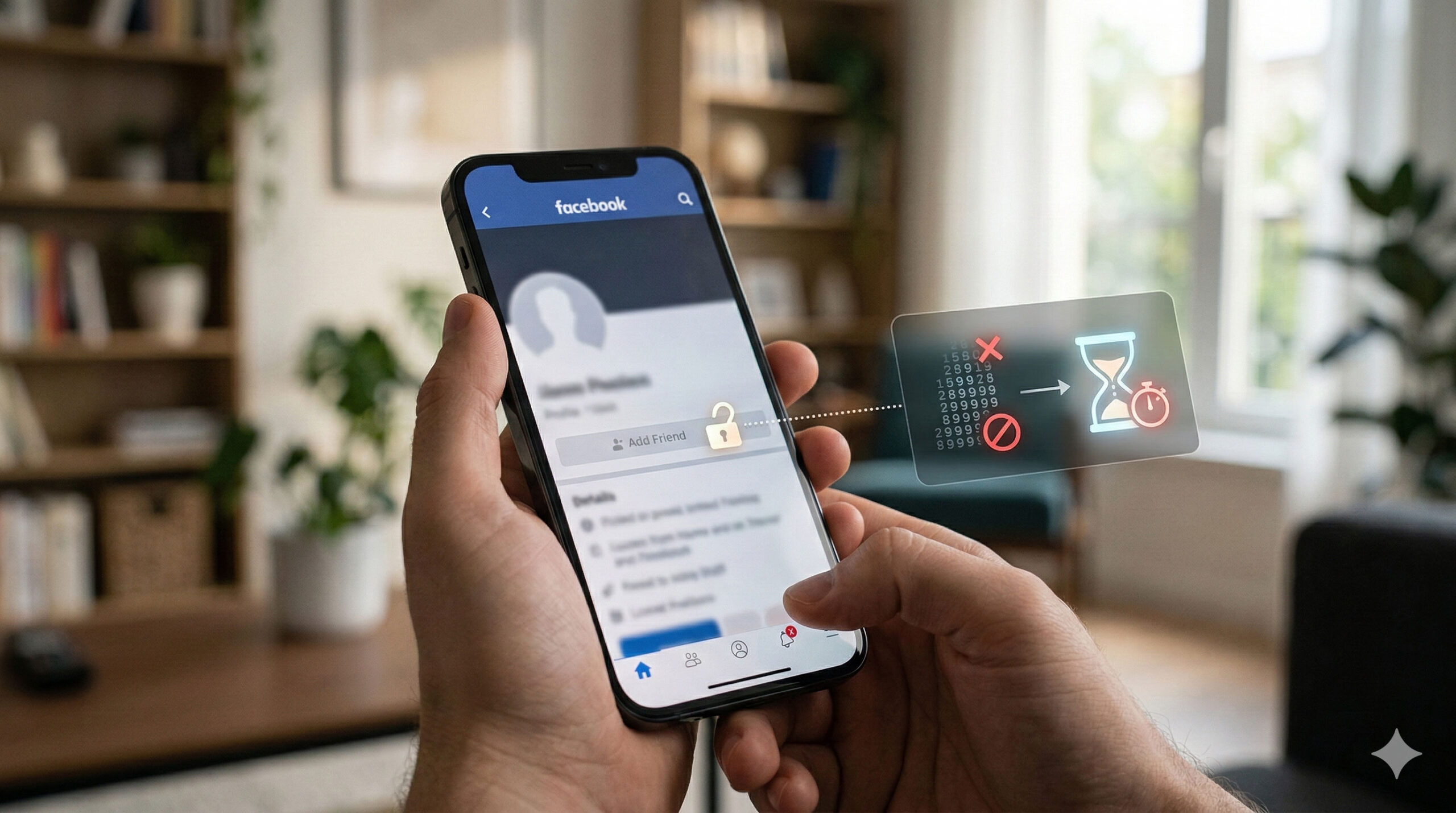

We have all been in that zone—maybe you just joined a new hobby group, or you are networking after a major industry event, and you are clicking that “Add Friend” button with the speed of a professional gamer. Suddenly, the screen freezes, and a dreaded message pops up: “You Can’t Use This Feature Right Now.” 😱 It feels like being pulled over by a digital traffic cop for “speeding” in a school zone you didn’t even know existed. 🚔
If you are currently staring at a blocked request button or an error message about exceeding the request threshold, don’t panic! You haven’t been permanently banned; you have simply triggered one of Meta’s most sensitive security tripwires. As a seasoned digital strategist navigating the social landscapes of 2026, I can tell you that these cooldown periods are the platform’s way of separating genuine human connection from automated spam. Today, we are going to break down the math behind the limits and the science of getting back in the algorithm’s good graces. 🚀🤝
Understanding the “Request Threshold” Logic 🔍
In 2026, Facebook’s AI is more vigilant than ever. The Request Threshold is not just a single number; it is a dynamic limit that changes based on your account’s “Trust Score.” 📵 For most established accounts, the system monitors two primary metrics: Velocity (how many requests you send per minute) and Accumulation (how many total “pending” requests you have active). 🛡️
When you send dozens of requests to people you don’t share mutual friends with—especially if you do it in a short window of time—the AI assumes you are either a bot or a “scam-harvester” trying to scrape data. This triggers an immediate Feature Block, which is essentially a localized suspension of your ability to send new friend requests while the rest of your account remains functional. 🚩
Why These Limits Are Essential for EEAT 💡
From a professional standpoint, hitting these limits can actually damage your EEAT (Experience, Expertise, Authoritativeness, and Trustworthiness). 🌟 A high-quality profile doesn’t need to “blast” requests to thousands of strangers. Instead, the algorithm rewards “Organic Connectivity.” Understanding the cooldown is crucial because:
-
Account Longevity: Repeatedly hitting the threshold flags your account for “Manual Review,” which can lead to permanent restrictions. 💸
-
Spam Reputation: Every time a recipient clicks “I don’t know this person” after you send a request, your internal trust score takes a massive hit. 📉
-
Marketplace & Group Access: If you are blocked from sending friend requests, the AI may also limit your ability to post in Facebook Marketplace or join new groups, as these are all seen as “outreach” actions. 📈
By slowing down and being intentional, you prove to the system that you are a high-value, human user rather than a disposable bot. 🤝
The Cooldown Blueprint: Durations and Recovery 🛠️
If you have hit the wall, here is exactly what you can expect in terms of timing and the steps you must take to recover:
1. The 24-Hour “Standard” Cooldown 🧊
Most first-time offenders will face a simple 24-hour block. During this time, the “Add Friend” button may disappear entirely or return an error every time you click it. Crucial Tip: Do not keep testing the button! Every failed attempt can be logged as “continued misuse,” which may extend the timer. 🤫
2. The 3-to-7 Day “Escalated” Block ✍️
If you hit the threshold again shortly after your first block expires, Facebook will escalate the penalty. This is often accompanied by a warning in your Support Inbox. During this period, you should focus on interacting with your existing friends (likes, comments, and shares) to rebuild your human activity profile. 🌈
3. The 1,000 Pending Request Limit 👤
Sometimes you can’t send requests because you have reached the “Pending” cap. Facebook generally allows up to 1,000 outstanding requests. If you have 1,000 people who haven’t accepted or declined you yet, the system stops you from sending more. You must go into your “Sent Requests” and cancel the oldest ones to free up space. 🤝
4. Clear Your Digital Fingerprint 🔄
If you are blocked on your phone but not on your desktop, it might be a device-level flag.
-
Log out of all devices to reset your session tokens. 💻
-
Wait at least 2 hours before logging back in to ensure the server-side “active session” has cleared. 📱
-
Check for App Updates in the Google Play Store or Apple App Store, as outdated versions can sometimes trigger false-positive spam flags. 🏢
Threshold Comparison: Trust Levels 📊
| Account Status | Estimated Daily Limit | Cooldown Penalty | Recovery Action |
| New Account (<30 days) | 5-10 requests | High (24-48 hours) | Complete profile & verify ID |
| Standard Account | 30-50 requests | Moderate (24 hours) | Slow down; add mutuals only |
| Verified/Aged Account | 100+ requests | Low (1-2 hours) | Cancel pending requests |
| Professional Mode | High (Velocity limited) | Varies | Use “Follow” as primary action |
A Real-World Anecdote: The “Conference Overload” 🛋️
Meet David, a realtor who attended a massive national convention. Over dinner, he tried to add 80 different people he had just met. By person #45, he was blocked. 😱 Because he couldn’t send requests, he couldn’t tag people in his photos or follow up on leads, making his networking efforts feel wasted. He had to wait 24 hours and manually search for each person again, this time sending a personalized Messenger note first.
The Metafor: Think of friend requests like knocking on doors. If you walk down a street and knock on every single door at 60 mph, the neighborhood watch (the AI) is going to call the police. If you walk slowly, stop to chat, and only knock on the doors of people you actually know, everyone stays happy. 🚪🚶♂️
Frequently Asked Questions (FAQ) 🙋♀️
1. Is there an official “daily limit” for requests?
Facebook does not publish a hard number to prevent people from “gaming” the system, but community data suggests that 50 new requests per 24 hours is the “safe zone” for most users. 🌐❌
2. Why can I still send messages but not friend requests?
Feature blocks are often specific. Messaging is considered a “communication” tool, while friending is a “growth” tool. Facebook usually blocks growth tools first to stop spam. 🕒
3. Does “marking as spam” by a recipient cause a block?
Yes! If just 2 or 3 people click “I don’t know this person” on your request in a single day, you will likely be hit with a cooldown immediately. 😊
4. How do I see my “Sent” requests to cancel them?
On mobile, go to your Friends tab, click “Requests,” then “See All,” and tap the three dots to find “View Sent Requests.” ✅
5. Can I “appeal” a friend request block?
Technically, no. There is no appeal form for temporary feature blocks. The best “appeal” is simply waiting for the timer to run out. 👻
6. Does having mutual friends help avoid the limit?
Absolutely. The algorithm is much more lenient when you have 5+ mutual friends with the person you are adding. 🏢
7. Does the limit apply to “Accepting” requests?
No, you can generally accept as many requests as you want, though “accepting too fast” (e.g., 500 in a minute) can still trigger a “Suspicious Activity” verification check. 🔢
8. Can I use a third-party tool to manage my friends?
Never. Using any automated tool or browser extension to send requests is the fastest way to get your account permanently disabled. 📖
9. Why does it say “Invite” instead of “Add Friend”?
This happens when you are trying to add someone who doesn’t have a Facebook account yet, or if their privacy settings are set to only allow “Friends of Friends.” 🤖
10. What if I am blocked for over a week?
Check your Support Inbox for a “Final Warning.” This usually means you have violated the Community Standards multiple times. 📩
People Also Asked (PAA) 🤔
-
How long is the temporary block on Facebook for friend requests?
Standard blocks last 24 hours, but repeat violations can lead to 3-day, 7-day, or 30-day suspensions. ⏳
-
Why can’t I send friend requests on Facebook even if I’m not blocked?
You may have reached the 1,000 pending request limit, or the person you are trying to add has restricted their privacy settings. 🚫👤
-
How do I bypass the Facebook friend request limit?
There is no bypass. The only way to “increase” your limit is to build an aged account with a high “Trust Score” by being a helpful, non-spammy user. 🔗🙅♂️
Conclusion: Quality Over Velocity! 🌟
In the hyper-connected world of 2026, it is tempting to try and grow your network as fast as possible. However, the Facebook messaging and request limits are a reminder that real relationships take time. By staying within the request threshold and respecting the cooldown period, you ensure that your profile remains a trusted, authoritative hub for your community. Slow down, personalize your outreach, and remember: it is better to have 500 genuine connections than 5,000 “ghost” friends that get you banned. 🥂
You should also read these…
- tugmen.com – crazy spin the wheel dares to play on vacation
- surgeblog.com – winter warfare energy grids why critical infrastru
- huesly.com – the gig economy 2 0 universal basic income as a sa
- axtly.com – unwanted tagging twitter x tag permissions and pre
- huesly.com – mental health apps do they really work or just col
- hogwar.com – problems with turning tiktok notification sounds o
- surgeblog.com – cant create a tiktok child account
- spyfrogs.com – my account is locked how verification and the appe
- olddry.com – the country with free healthcare no rent and sunsh
- hogwar.com – tiktok privacy settings not working solutions