


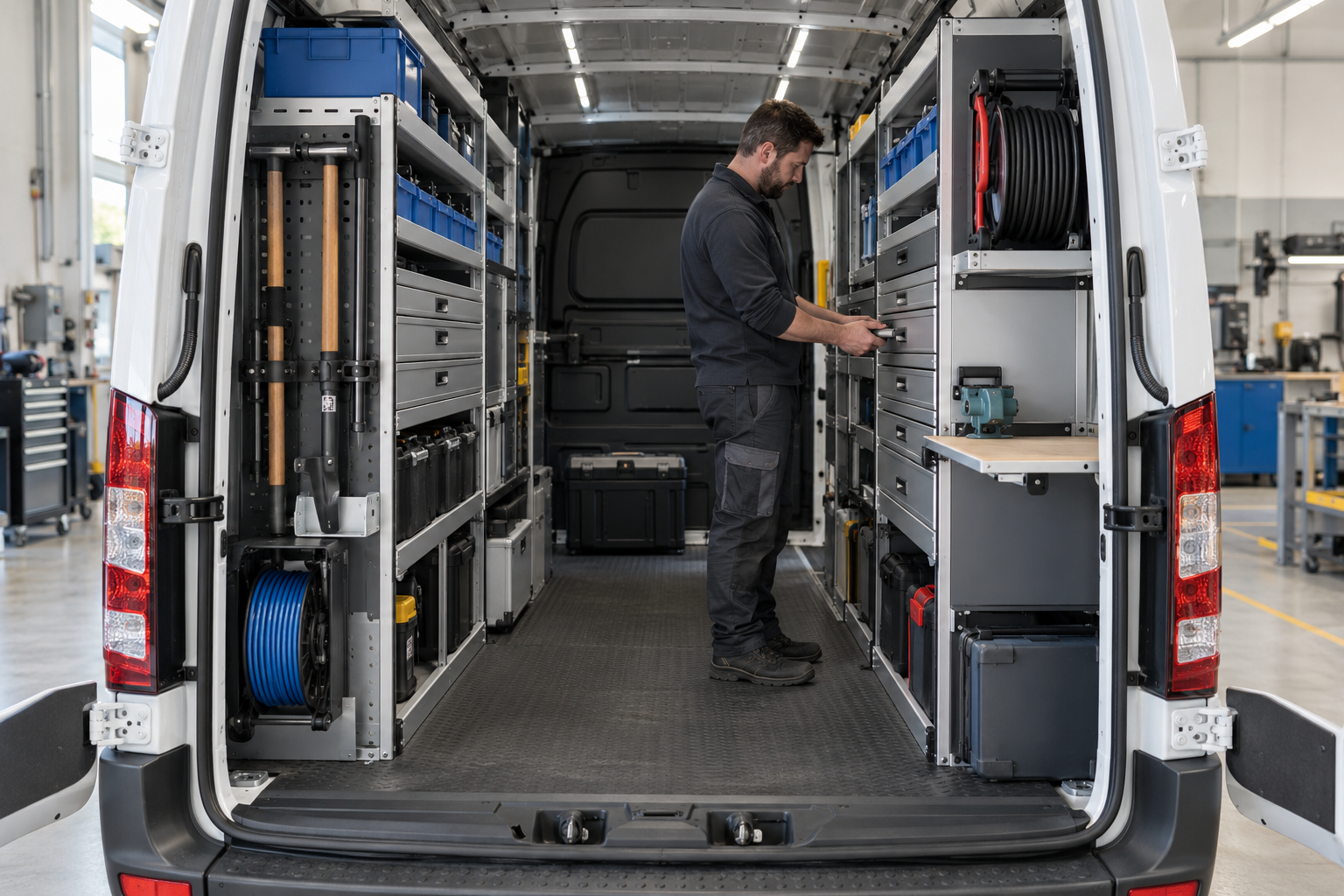

When I step into a well planned technical service van, I immediately feel the difference, because the vehicle does not look like a metal box filled with tools, it feels like a compact workshop where every movement has a purpose, every drawer has a reason, and every frequently used part is exactly where the technician expects to find it. 🚐🔧 In my experience, this is the real starting point of planning: we should not begin by asking how many shelves can fit inside the van, but by asking what the technician does during an ordinary working day, which tools leave the vehicle most often, which spare parts must stay protected, which materials create weight, and which movements waste time or cause strain. A carefully designed technical service vehicle can reduce searching, prevent damage, support safer driving, and help a technician arrive at the customer with the calm confidence of someone who knows that the whole workshop is travelling with them. This practical philosophy is also central to the way Detay Industry approaches a service vehicle project, because an effective interior should support the workflow rather than force the worker to adapt to a random arrangement.
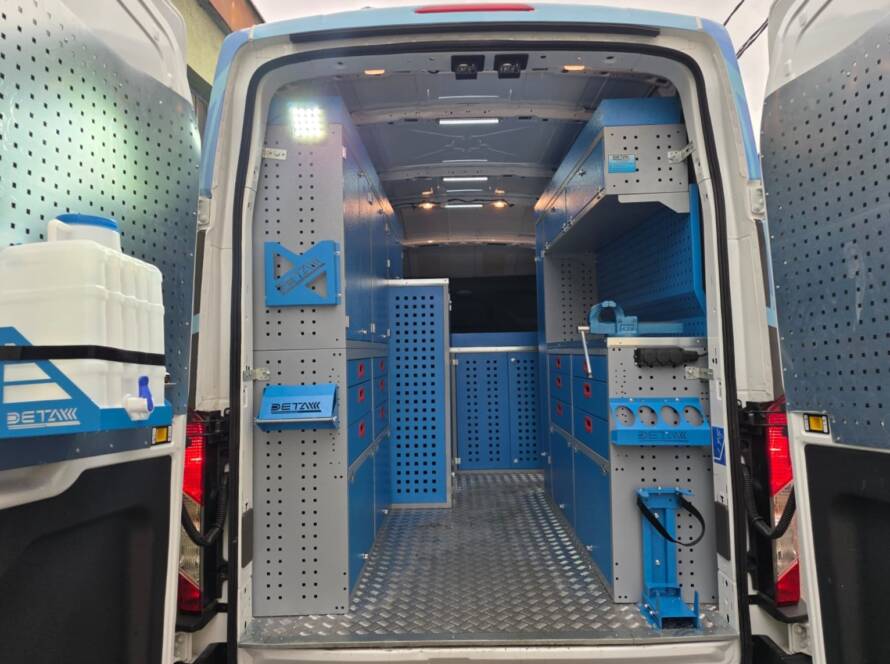
Start with the Service Workflow, Not the Empty Cargo Area
The most common planning mistake is to measure the cargo compartment, select a few cabinets, and then hope that the daily operation will somehow fit around them, while the better approach is to observe or document the real service process first. I usually recommend listing the technician’s tasks in the order they happen, from opening the rear door and collecting diagnostic equipment to reaching consumables, carrying power tools, handling cables, and returning used parts after the job. This task map reveals which items need immediate access from the side door, which items can remain deeper in the van, and which heavy equipment should stay low and close to a structurally suitable mounting area. For example, an electrician may need meters, terminals, cable reels, and small component boxes at hand height, while an HVAC technician may need larger tools, pumps, cylinders, and protected storage for sensitive instruments. A properly designed in-vehicle cabinet system therefore begins as a map of human actions, not merely a drawing of shelves.
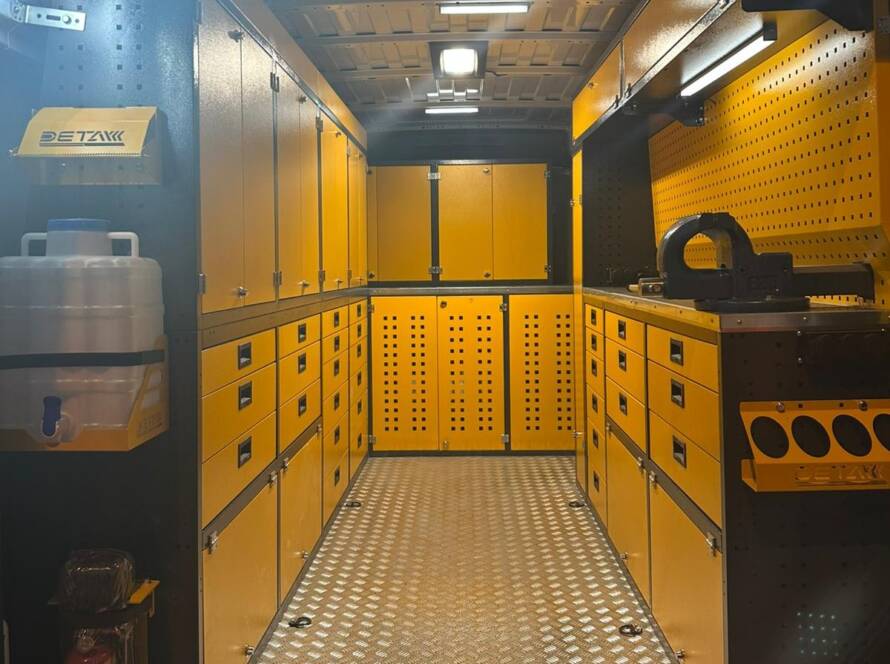
This workflow based method also makes the vehicle easier to use under pressure, because technicians rarely work in perfect conditions, and they may need to find a fuse, connector, hand tool, or safety item in rain, darkness, traffic, or a crowded customer site. 🌧️🧰 I remember reviewing a service vehicle where the most frequently used tester had been placed in a beautiful cabinet at the very front of the cargo area, yet the technician had to climb into the van several times a day to reach it, so the cabinet looked orderly but the work process felt exhausting. We moved the tester and its accessories into a secure drawer near the side door, and that small decision transformed the technician’s daily rhythm. This is why I see vehicle organization as choreography: the shelves, drawers, doors, and access points should guide movement smoothly, like marks on a stage, without forcing the worker to bend, twist, or search unnecessarily.
Respect Payload, Axle Loads, and Manufacturer Instructions
Before choosing materials or cabinet dimensions, the planner must calculate the complete working weight of the conversion, including cabinets, drawers, partitions, flooring, electrical equipment, tools, spare parts, consumables, driver, passengers, and any liquids or machinery carried during normal operation. The allowable payload is not simply empty space waiting to be filled, because accessories and conversion equipment consume part of that capacity, and poor weight distribution can affect handling, braking, tyre loading, and component life. Vehicle manufacturers publish body and equipment guidance for converters, and Mercedes Benz, for example, states that its publications describe technical specifications and limitations that should be followed by anyone installing equipment in its vans. I always advise checking the exact model, wheelbase, roof height, drive configuration, gross vehicle weight, and axle limits rather than relying on a general van category, because two vehicles that look nearly identical can have very different legal and technical capacities. The official Mercedes Benz Body and Equipment Guidelines provide a useful example of the level of manufacturer information that professional planners should consult before drilling, fastening, wiring, or adding substantial equipment. 🚐📐
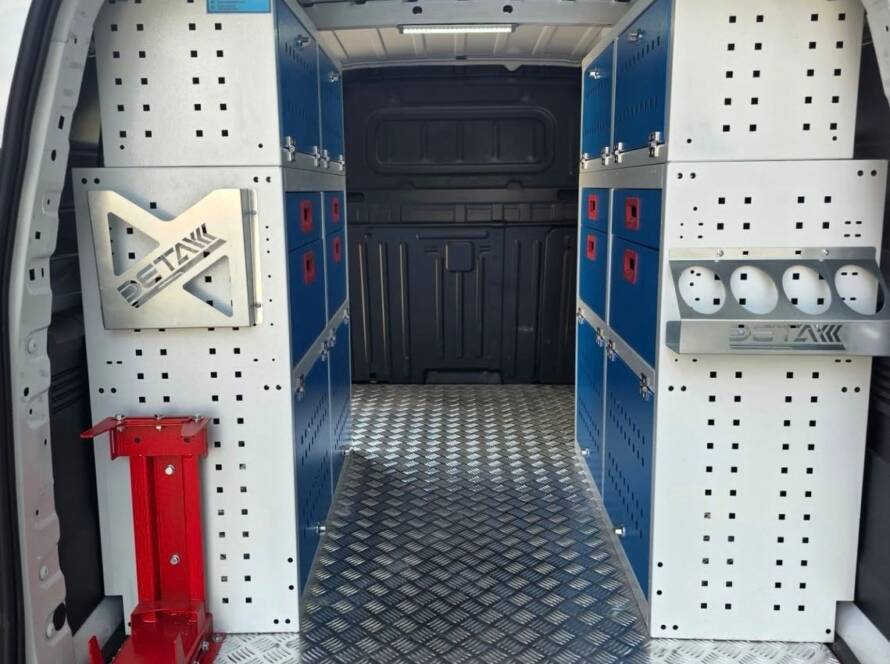
I prefer to place dense and heavy items as low as practical, distribute them between the sides with attention to the vehicle’s axle loading, and avoid creating a tall, heavy wall of equipment on only one side. A lightweight but structurally appropriate in-vehicle equipment rack can preserve more useful payload than an unnecessarily massive installation, yet lightweight construction should never mean weak fastening or thin components that deform under repeated road vibration. The ideal solution balances strength, mass, repairability, corrosion resistance, and long term use. This is one reason modular engineering from Detay Industry can be valuable: the layout can be developed around the vehicle and task profile rather than treating every panel van as the same rectangular room.
Plan Safety as Part of the Furniture
Loose tools are not only untidy, because sudden braking, a sharp turn, or a collision can turn an unsecured object into a dangerous moving mass. The United Kingdom Health and Safety Executive states that anything transported on or in a vehicle must be secured to the vehicle, and it also recommends considering manual handling, falling items, loading, unloading, and shifted loads during risk assessment. The Driver and Vehicle Standards Agency guidance similarly covers vans and cars as well as larger goods vehicles, and it explains that operators should choose an appropriate load securing system, stabilize loads, and use suitable securing methods. In practical terms, every drawer should have a reliable locking mechanism, every open shelf should use lips, dividers, doors, straps, or boxes where appropriate, and bulky mobile equipment should connect to rated securing points rather than depend on friction or wishful thinking. A strong in-vehicle tool cabinet protects tools only when the cabinet itself, its contents, and its connection to the vehicle remain secure during travel. 🔒🛠️
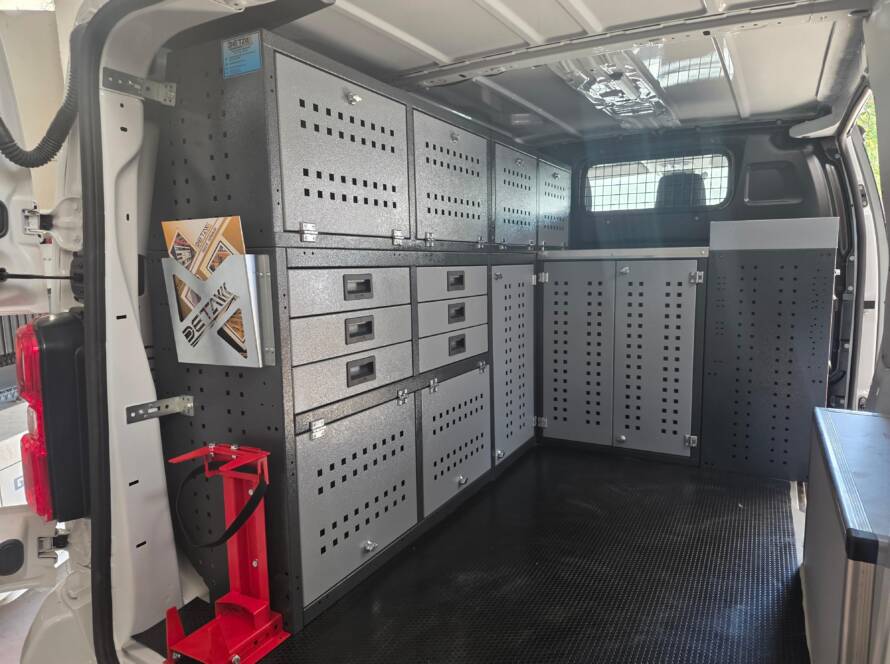
The partition between the cabin and cargo compartment also deserves serious attention, because it creates a protective boundary between occupants and transported equipment. The floor must provide a stable base, walking surfaces should reduce slipping, and access routes should remain clear enough for safe entry and exit. I also recommend creating separate storage zones for sharp tools, chemicals, batteries, wet equipment, personal protective equipment, clean consumables, and returned or contaminated parts, because mixing these groups can cause damage, leakage, confusion, and hygiene problems. When the service activity involves compressed gas, fuel, hazardous substances, high voltage components, or specialist machinery, the planner should add the applicable ventilation, fire protection, electrical, occupational safety, and local regulatory requirements rather than assuming ordinary storage rules are enough. A well organized in-vehicle material cabinet should therefore be designed around the material’s behavior, not only its dimensions.
Use Ergonomics to Save Energy Every Day
Ergonomics is often misunderstood as comfort, yet in a technical service vehicle it directly affects productivity, fatigue, and the risk of musculoskeletal injury. The Occupational Safety and Health Administration explains that lifting heavy items, bending, reaching overhead, pushing, pulling, awkward postures, and repetitive tasks are recognized risk factors, while fitting the job to the worker can reduce fatigue and improve productivity. That principle has a simple meaning inside a van: frequently used and moderately weighted tools should sit between knee and shoulder height when possible, very heavy items should stay low, occasional light items can occupy higher shelves, and drawers should extend far enough to reveal their contents without forcing the technician to reach blindly. I also like to involve the actual vehicle users during planning, because worker participation represents an important part of a successful ergonomic process, and the technician often knows small details that no catalogue or drawing can reveal. 👷♂️✅
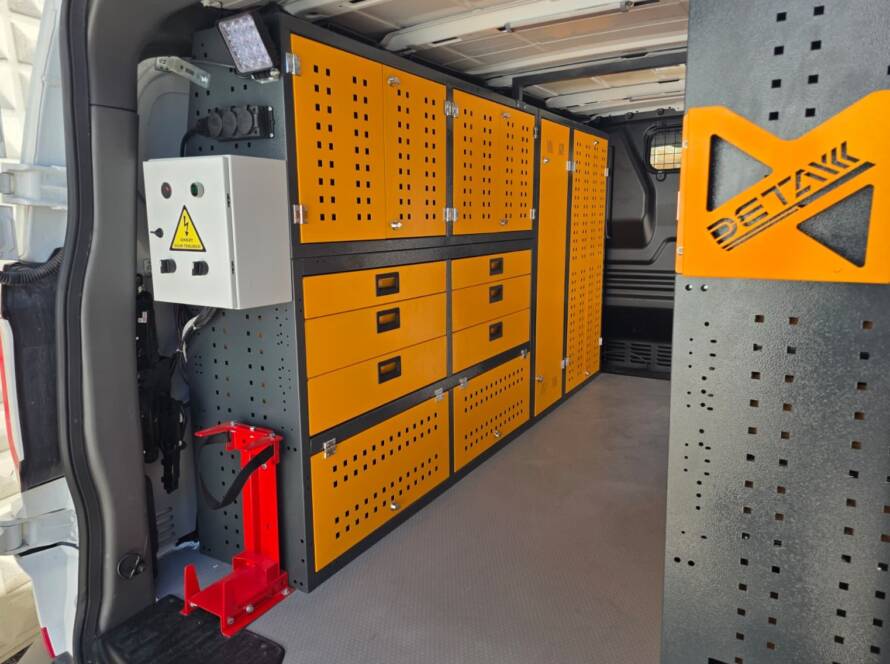
Door direction, drawer travel, handle position, lighting, and standing space all influence the body’s effort, so I recommend testing the proposed layout with full size cardboard outlines or a simple digital model before production. Imagine a technician holding a toolbox in one hand while opening a cabinet with the other; can the door move freely, can the worker maintain balance, and can another person pass safely? A thoughtfully positioned in-vehicle rack system should answer these questions before the first metal component is cut. This early test costs little, yet it often reveals conflicts between the side door, wheel arch, drawer extension, work light, cable reel, and walking aisle. In my view, mock up testing is like trying on a tailored jacket before the final stitching, because a few small adjustments can turn an acceptable layout into one that genuinely fits its user.
Create Clear Storage Zones and a Visual Logic
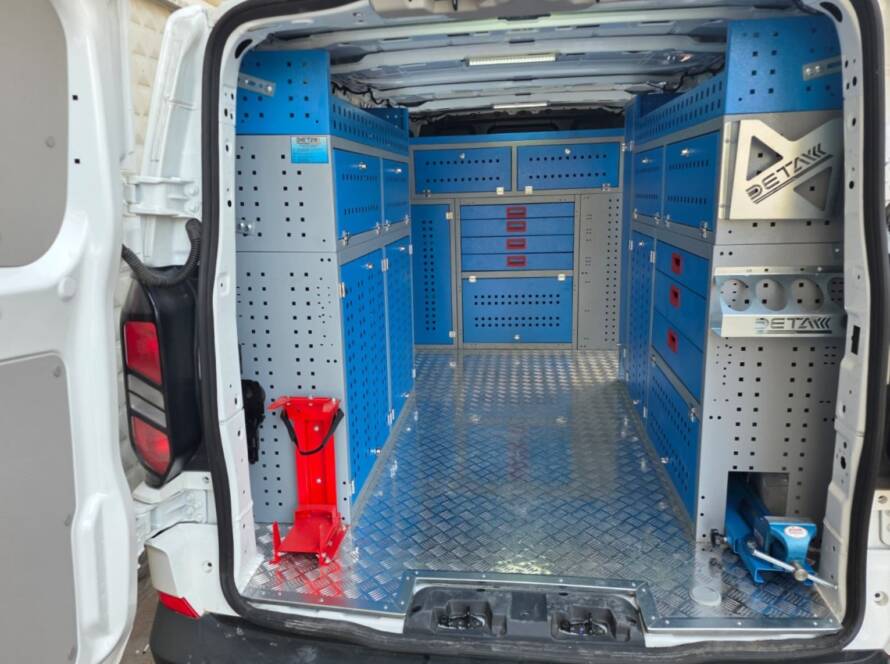
A service van becomes easier to manage when its interior follows a simple visual language. I often divide the space into five zones: immediate access tools near the side door, diagnostic and sensitive equipment in protected drawers, heavy machines low and close to secure mounting points, consumables in labelled bins, and long or bulky items in dedicated channels or restrained floor areas. This structure allows the technician to understand the van at a glance, and it also helps another team member use the same vehicle without opening every drawer. A modular layout supports change over time, because service teams add new equipment, retire old devices, and adjust stock levels as customer needs evolve. The most useful in-vehicle equipment layout therefore leaves a measured amount of expansion capacity instead of filling every centimetre on the first day.
| Planning Zone | Best Use | Recommended Position | Main Risk to Control |
|---|---|---|---|
| Fast access zone | Hand tools, test devices, and daily consumables | Near the side or rear door at a comfortable reach height | Items falling when doors open |
| Heavy equipment zone | Compressors, generators, pumps, and large machines | Low, restrained, and positioned with axle loading in mind | Overloading, instability, and difficult lifting |
| Protected equipment zone | Diagnostic devices, calibrated instruments, and electronics | Lockable drawers with dividers or protective inserts | Shock, vibration, theft, and contamination |
| Consumables zone | Connectors, fasteners, filters, and small replacement parts | Clearly labelled bins or shallow drawers | Mixing stock and losing small items |
| Flexible cargo zone | Temporary parts, customer equipment, and larger packages | Open floor area with suitable securing points | Shifted loads and blocked access |
This table is not a universal blueprint, because each trade needs a different balance, but it offers a practical decision framework. A mobile maintenance team may allocate more room to a folding workbench, while a telecommunications team may prioritize reels, ladders, connectors, and electronic test devices. A roadside assistance vehicle may need rapid external access to safety cones, warning lights, jacks, and battery equipment before the technician enters the main storage area. The right design does not follow fashion; it follows the service mission.
A Practical Planning Example
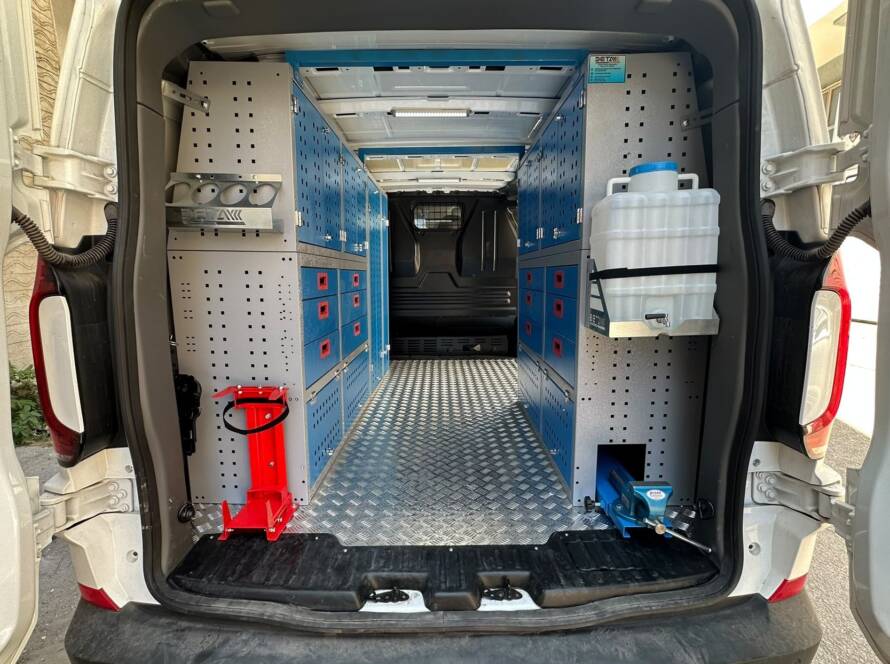
Let us imagine a medium roof panel van used by two technicians who maintain industrial machinery. Their daily equipment includes hand tools, a diagnostic computer, measuring instruments, replacement sensors, cables, lubricants, a compact vacuum, a folding bench, and several heavy cases. I would begin by weighing the fixed installation and the normal tool inventory, then compare the total with the vehicle’s permitted payload and axle limits. Next, I would place the heavy cases and vacuum low, secure them independently, position shallow component drawers near the side door, reserve a lockable protected drawer for the computer and meters, and keep a clear central aisle. The folding bench would sit near the rear door so outdoor tasks can be completed without unloading half the van, while a roof level channel could carry only suitable lightweight long items. Lighting would cover the aisle, drawers, and rear work point, and power outlets would be placed where cables do not cross walking routes. This layout could use adaptable rack systems on one side and a combination of drawers and enclosed cabinets on the other, while still preserving a flexible area for occasional customer parts.
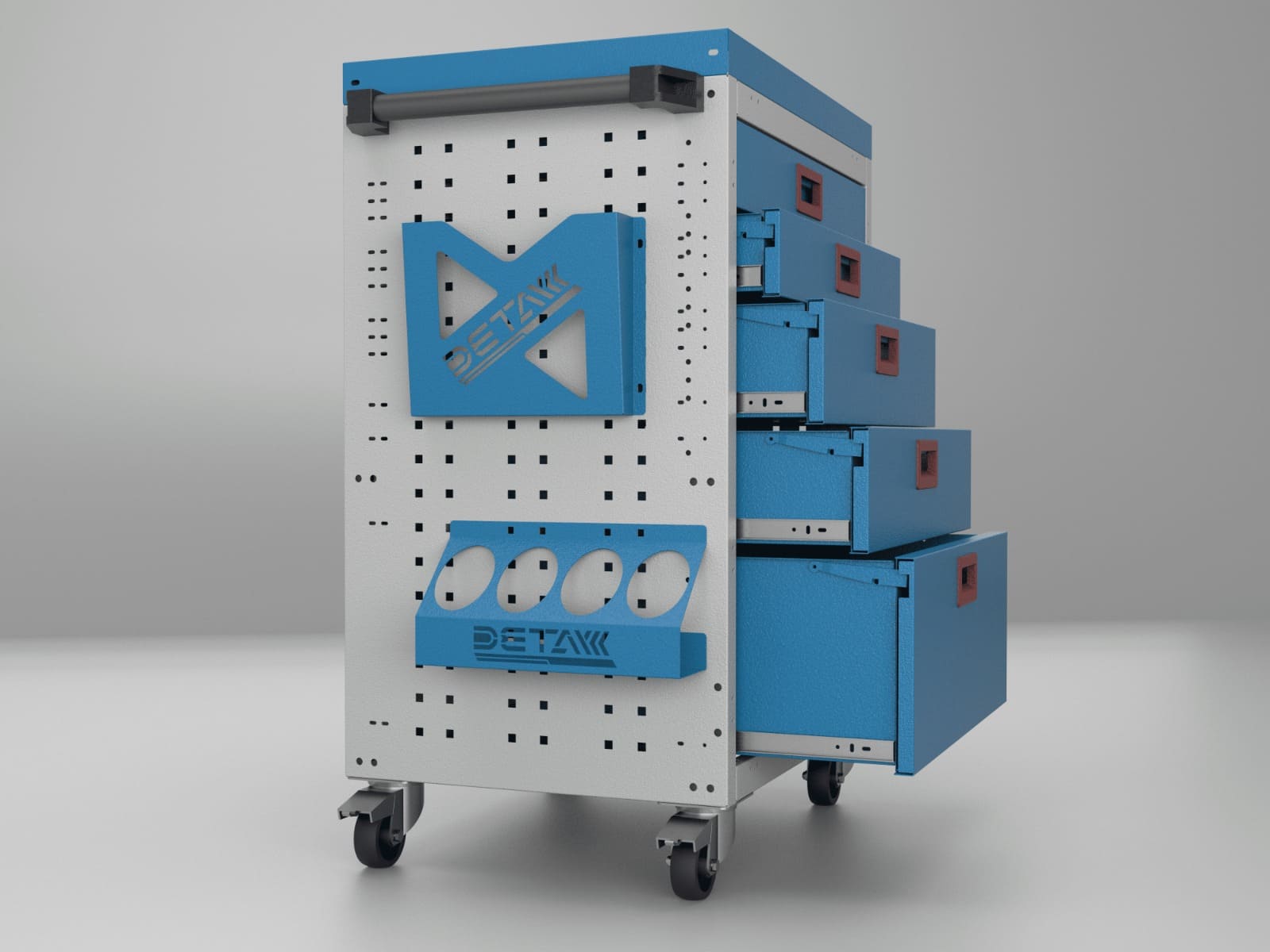
After the first layout, I would invite the technicians to simulate a normal job, ask them to collect five frequently used items, place a returned component in the correct area, and set up the folding work surface. I would record unnecessary steps, awkward reaches, door conflicts, and moments when one worker blocks the other. Then I would refine the arrangement before final manufacturing. This user testing stage is where Detay Industry can turn a good technical drawing into a practical mobile workplace, because the final centimetres should come from real movement, not guesswork. 😊📋
Choose Materials, Fasteners, and Details for Long Term Use
Technical service vehicles experience vibration, temperature changes, dust, moisture, repeated impacts, and thousands of opening and closing cycles, so component quality matters in ways that are easy to overlook during a showroom inspection. Cabinet bodies should resist deformation, drawer slides should match the expected load, locking systems should remain dependable on uneven roads, and surfaces should tolerate the chemicals and dirt associated with the trade. Fastening points must follow vehicle specific engineering guidance, and installers should avoid damaging structural members, wiring, fuel systems, batteries, sensors, corrosion protection, or safety technology. The best design also considers maintenance: can a damaged drawer slide be replaced, can the floor be cleaned, can wiring be inspected, and can modules be adjusted when the fleet changes? A durable in-vehicle cabinet should age like a dependable tool, showing signs of honest work without losing its function.
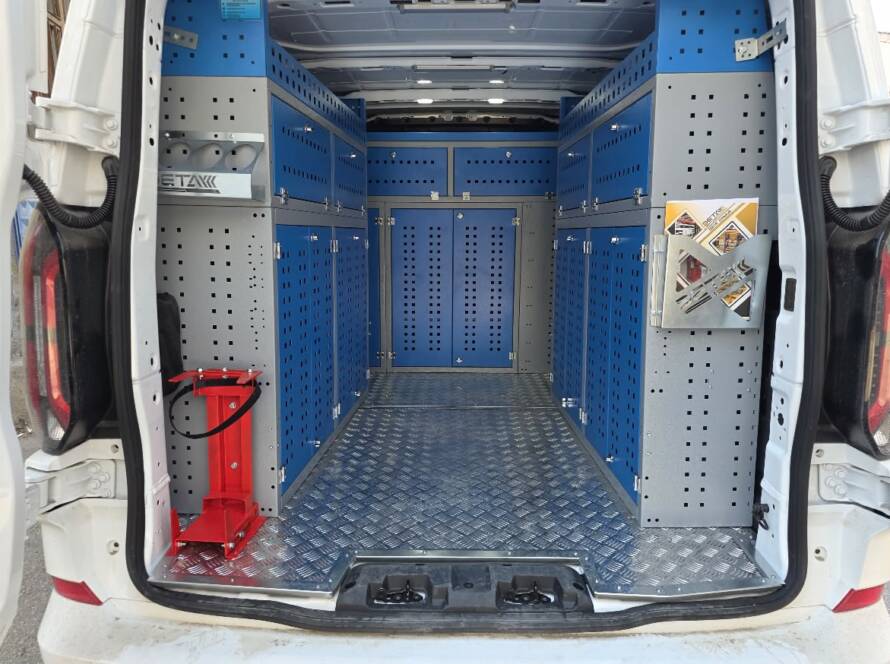
I also recommend treating lighting and electrical planning as part of the cabinet design rather than an afterthought. LED work lights should illuminate shelves and drawers without creating glare, switches should be easy to reach from entry points, and cables should run through protected routes with suitable fusing and isolation. When an inverter, auxiliary battery, charger, compressor, or external power input is added, a qualified specialist should calculate demand, ventilation, protection, cable sizing, and compatibility with the vehicle’s electrical architecture. These systems can greatly improve field capability, but only when they are integrated responsibly. The result should feel simple to the technician even when the engineering behind it is sophisticated.
Review the Van After Real World Use
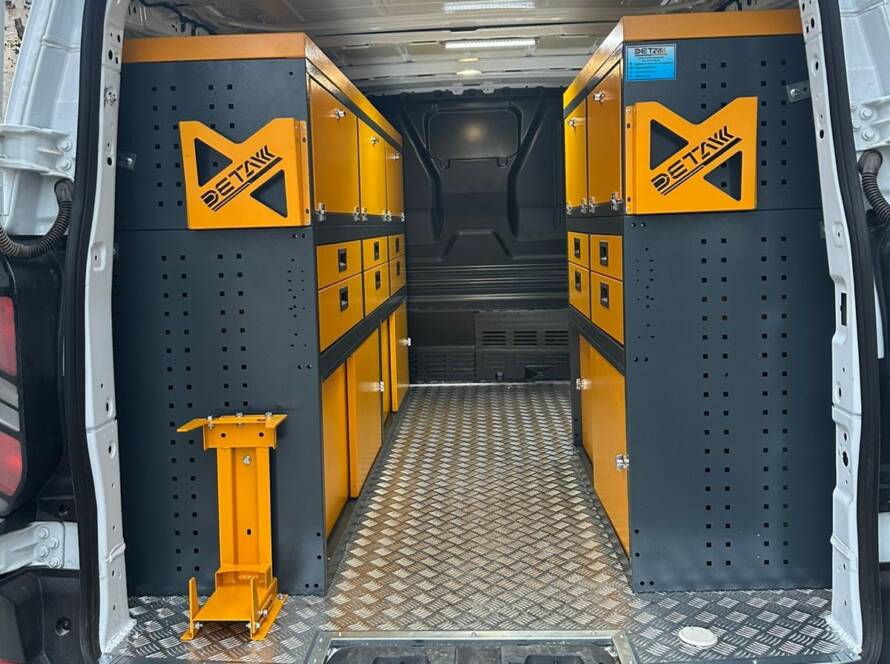
No interior plan should be considered finished on delivery day, because the first weeks of field use reveal patterns that even experienced planners cannot fully predict. I suggest a review after one month and another after three to six months, focusing on unused compartments, overloaded drawers, frequently misplaced items, noise, loose fasteners, damaged labels, and new tools that have appeared. The team should also inspect securing devices, drawer locks, cabinet connections, and electrical components on a planned schedule. This feedback loop helps the installation remain safe and useful rather than slowly returning to disorder. A professional solution from Detay Industry should support this long term mindset, because a mobile workshop creates value every day, not only when it first looks clean and impressive.
Build a Mobile Workshop Around People and Purpose
Planning a panel van for technical service means bringing safety, payload, workflow, ergonomics, storage logic, electrical needs, and future flexibility into one coherent design. The best interior does not simply hold many objects; it helps the technician think clearly, move naturally, protect valuable equipment, and complete work with fewer interruptions. I always return to one simple question: can the user find, remove, use, and safely return every important item without unnecessary effort? When the answer is yes, the vehicle begins to feel less like transport and more like a trusted colleague. 🚐🤝 A carefully engineered layout from Detay Industry can provide that confidence by combining modular storage, secure mounting, accessible work zones, and a design process grounded in the realities of the job. When every drawer, shelf, and open area has a clear purpose, the service van becomes a small but highly capable workshop that carries order, professionalism, and readiness wherever the next call leads.